
🚀 Launching DeepSeek-V3.2 & DeepSeek-V3.2-Speciale — Reasoning-first models built for agents! 🔹 DeepSeek-V3.2: Official successor to V3.2-Exp. Now live on App, Web & API. 🔹 DeepSeek-V3.2-Speciale: Pushing the boundaries of reasoning capabilities. API-only for now. 📄 Tech
Trading Life
03-12-2025 14:25
1 Views
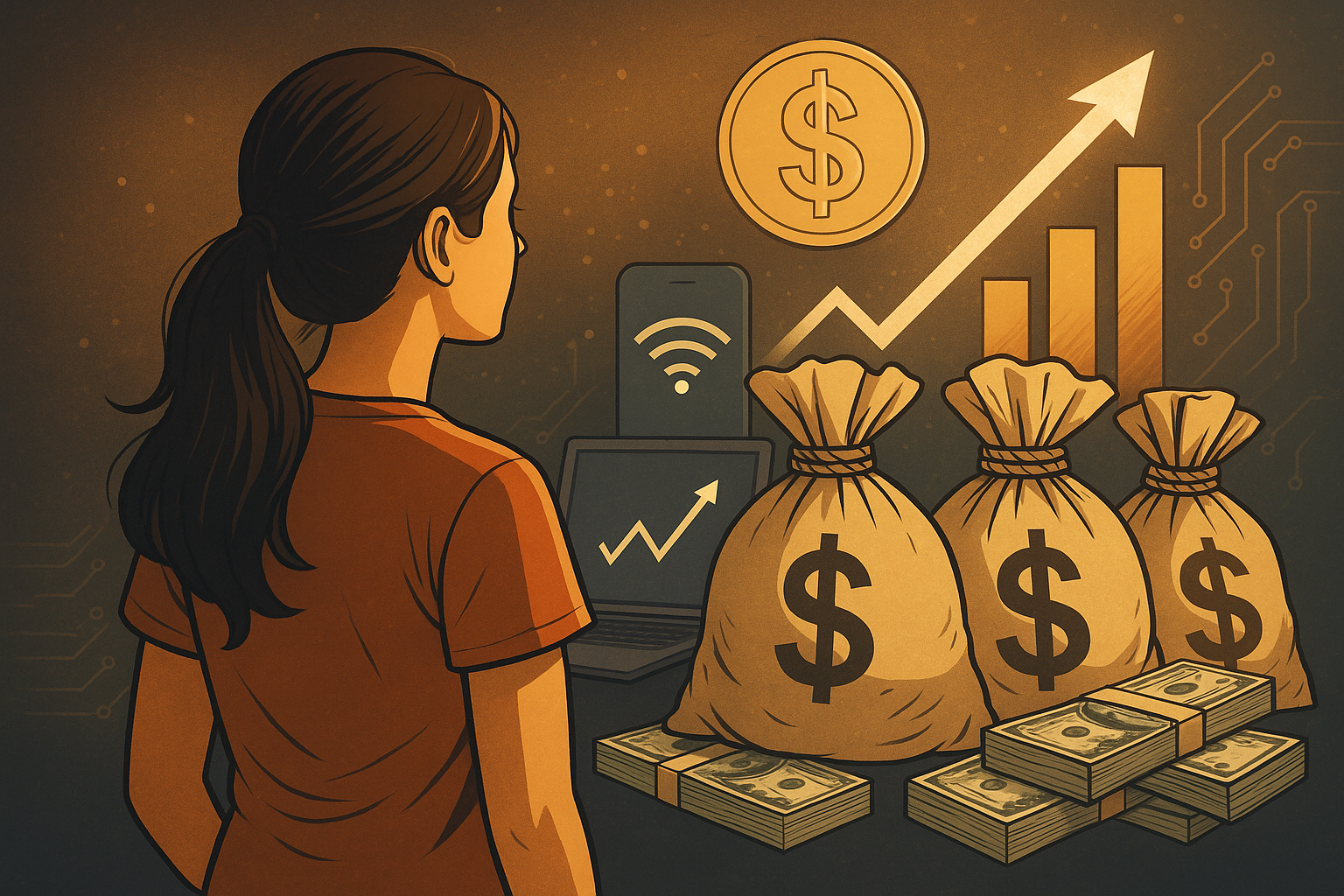
The AI race heats up as bubble fears continue to worry investors

The past few months have felt like watching a new industrial revolution develop at fast-forward speed.
Each week, another breakthrough model arrives. Another tech giant hints at a new data centre the size of a town.
Another start-up floats a valuation that would have seemed absurd a year ago.
Investors have been trying to ride the wave, yet many global assets sold off recently, as if markets suddenly realised something wasn’t quite matching up.
The noise was loud, and the numbers were bigger. But the picture was getting harder to read.
Some worry about who’s leading the AI race, while others are still voicing their concerns about the bursting of the “AI bubble”.
How the race became a sprint with no finish line
When ChatGPT appeared in late 2022, Silicon Valley behaved like someone had discovered oil under every office park. The bet was simple.
Scale the models. Scale the compute. Scale the revenue. In that first phase, it didn’t matter that costs were rising. What mattered was speed.
By late 2025, the field has changed shape, and OpenAI no longer looks untouchable.
The company recently declared a company-wide “code red” to shore up ChatGPT after Google’s Gemini 3 outperformed rivals on several benchmarks.
Sam Altman paused new ventures to focus on speed, reliability and personalisation.
That kind of urgency from the market leader tells investors something important.
The lead time at the frontier is shrinking, and the moat around “best model wins” is thinner than assumed.
But Google and OpenAI are not fighting alone.
China’s DeepSeek says its latest V3.2 model matches GPT-5 in reasoning tests and reaches Olympiad-level performance in mathematics.
Mistral in Paris has pushed out open models designed to run on devices rather than giant server farms.
Europe’s biggest banks are already using them.
At the same time, Anthropic is preparing for what could become one of the largest IPOs in US tech history, having hired Wilson Sonsini to begin formal groundwork as it races OpenAI to the public market, according to the Financial Times.
Frontier AI is no longer a one-horse race. It is starting to resemble the early smartphone years when every company was forced to ship a new flagship each season.
For investors, this means one thing. The window to earn outsized returns from a temporary technological lead is closing.
The industry is becoming competitive at the top far sooner than expected.
The hidden cost that is rewriting the economics
The magic of AI sits on top of some very unmagical numbers. IBM’s chief executive, Arvind Krishna, recently offered a blunt calculation.
Filling a one-gigawatt AI data centre with the latest chips costs roughly eighty billion dollars.
Major labs and cloud providers are discussing building close to 100 gigawatts of such capacity.
Simple multiplication puts the price tag near eight trillion dollars, before counting operating costs or energy upgrades.
Even at modest interest rates, the annual profit required just to cover the cost of capital approaches $800 billion.
Most investors had not done this math. Once they did, the sell-off across tech made more sense.
Markets realised the race is no longer being fought with code and data but with capex bills of a size last seen in national infrastructure projects.
Depreciation adds another problem. AI chips become obsolete fast. Krishna said the useful life is about five years.
That means enormous replacement cycles are built into the model. AI today isn’t behaving like software in the cloud. It is behaving like heavy industry.
And Krishna is not alone.
The Bank of England recently warned that AI-linked valuations in the United States look as stretched as they did before the dot-com crash.
It expects global AI spending to exceed five trillion dollars in the next five years and says roughly half of that will be financed through debt.
Major tech groups have issued around $250 billion of new debt this year to fund infrastructure.
This pattern looks less like the early internet and more like a capital-intensive utility buildout.
A bubble in that environment doesn’t just hit equity investors. It hits lenders and credit markets as well.
When assets were sold off across global markets, this was one of the reasons.
Investors realised that AI is no longer a free option for future growth.
It is now tied to real-world balance sheets and energy grids. The downside risk is bigger than they thought.
The hardware scramble shaping the next chapter
The fear of being locked into Nvidia’s ecosystem has pushed every major platform into its own hardware strategy.
Google is expanding its custom TPU program. The latest Ironwood chips are water-cooled and arranged in pods of more than nine thousand units.
Anthropic signed a deal giving it access to around a million TPUs over time.
Amazon rushed out its Trainium3 accelerator and dedicated hundreds of thousands of units to support Anthropic’s model training.
This wave of investment shows how the industry is trying to break out of the GPU bottleneck.
It also reinforces the size of the commitment. These are long-lived assets with little flexibility.
If the underlying model architecture shifts direction, some of this hardware becomes less useful. Investors have started to worry about that too.
Yann LeCun, one of AI’s pioneers, argues that current large language models are “correlation machines” and cannot reach general intelligence without a different architecture.
Ilya Sutskever, cofounder of OpenAI, says the scaling era is ending. If they are right, the immense buildout tailored to today’s LLMs may not support tomorrow’s needs.
That is the sort of risk that markets had not priced.
What happens if the hype cools but the technology survives
History shows that most technological booms overshoot. Railways did. Radios did. The internet certainly did.
Investors chasing the upside tend to push valuations beyond what the first wave of business models can justify. But the underlying technologies endure.
AI sits somewhere in that story. The use cases are real. Enterprises are starting to deploy models for coding, analysis and customer operations.
Apple is reorganising its entire software group around on-device intelligence.
Reddit is using Amazon’s new Nova Forge to build its own policy-enforcement model.
These examples suggest AI is shifting from novelty to infrastructure.
The challenge is timing. Productivity benefits take time to show up. The capex bills arrive now.
When global equities fell, this mismatch helped explain the reaction.
Investors understood they might have to wait longer for payback, while the borrowing costs were immediate.
What remains after the froth settles will matter more than the correction itself. Optical networks. Personal models on devices.
Custom silicon. Smaller open models that run in cars or laptops. These pieces look durable because they embed AI into the physical and digital structure of the economy.
The labs fighting for the frontier may rise or fall, but the infrastructure stays.
The real lesson for global investors is that the “AI boom” is neither pure fantasy nor a straight path to infinite returns.
It is an expensive technological transition happening in real time and under real financial constraints.
The payoff will come, but not evenly and not immediately. The turbulence in asset prices is the market trying to work out who will capture that value and who will just foot the bill.
The post The AI race heats up as bubble fears continue to worry investors appeared first on Invezz
Other news