
Nvidia’s China tightrope: H200 chips, geopolitics and a high-stakes AI gamble
The calendar may have turned, but for Nvidia, the familiar strains of geopolitics continue to loom large.
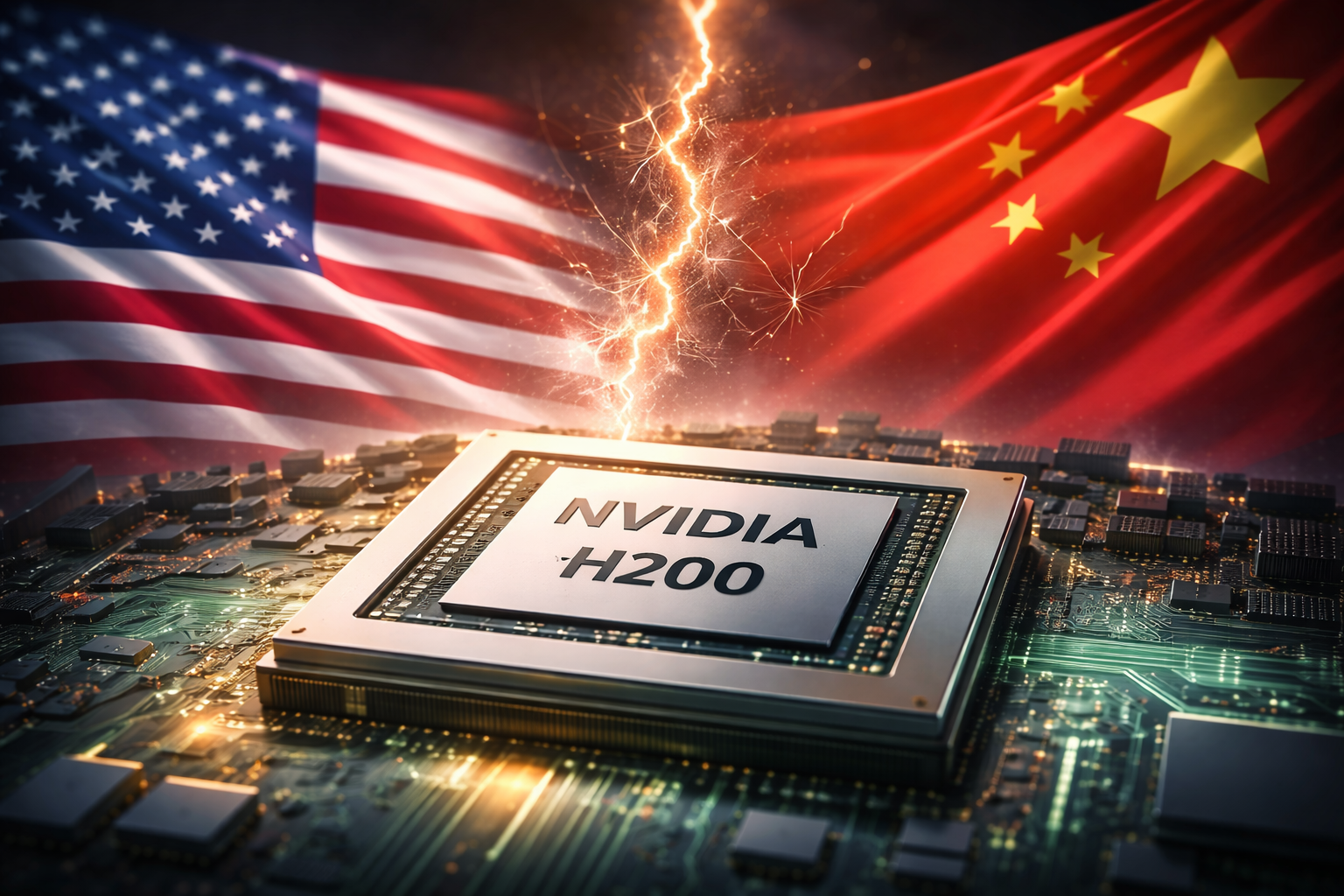
As the world’s leading maker of artificial intelligence chips, the US company remains caught between Washington’s tightening grip on advanced semiconductor exports and Beijing’s determination to reduce reliance on foreign technology.
In December, US President Donald Trump had announced that his administration would remove export controls on Nvidia’s H200 artificial intelligence chips for China, reversing a ban imposed under the previous Biden administration.
For Nvidia and its chief executive Jensen Huang, the announcement was a welcome win after Huang spent months lobbying the White House, arguing that blocking US chipmakers from China would ultimately strengthen domestic Chinese rivals rather than protect American leadership.
Fresh jolt: China asks some tech cos to stop placing new orders for H200 chips
However, those expectations were jolted this week after The Information reported that Chinese authorities had asked some technology companies to stop placing new orders for Nvidia’s H200 chips.
The report said regulators were reviewing whether the chips should be allowed into the country and under what conditions, signalling a pause rather than a blanket rejection.
According to the report, Beijing is keen to prevent companies from stockpiling US-made chips before a final decision is reached.
“China is committed to basing its national development on its own strengths, and is also willing to maintain dialogue and cooperation with all parties to safeguard the stability of global industrial and supply chains,” said Liu Pengyu, a spokesperson for the Chinese Embassy in Washington.
China could allow purchases of H200 for select uses
Adding to the uncertainty, Bloomberg reported on Thursday that China is preparing to approve some imports of Nvidia’s H200 chips as soon as this quarter.
As per the report, Chinese officials are considering allowing purchases for select commercial uses, while keeping strict limits in place for sensitive areas.
Under the plan, the chips would be barred from use by the military, critical infrastructure, sensitive government agencies and state-owned enterprises, citing security concerns.
Similar restrictions have previously been applied to other foreign technology products, including devices from Apple and memory chips from Micron Technology.
Requests from restricted organisations could still be reviewed individually, the report added, citing sources.
Nvidia moves to protect itself; demands full upfront payment
Against this shifting backdrop, Nvidia has taken steps to shield itself from potential losses if approvals are delayed or withdrawn.
Reuters reported that the company has begun demanding full upfront payment from Chinese customers seeking to buy H200 chips, imposing stricter commercial terms than usual.
The policy requires customers to pay in full at the time of ordering, with no option to cancel, seek refunds or change configurations after orders are placed.
In limited cases, clients may be allowed to provide commercial insurance or asset collateral instead of cash.
While advance payments have long been part of Nvidia’s standard terms for Chinese clients, they were previously allowed to place deposits rather than pay the full amount up front.
For the H200, however, Nvidia has tightened conditions, reflecting the lack of clarity over whether shipments will ultimately be approved.
The move reflects hard lessons learned.
Last year, Nvidia took a $5.5 billion inventory write-down after a sudden US ban blocked sales of the H20 chip to China, highlighting how quickly policy shifts can translate into financial pain.
Demand in China remains strong despite uncertainty
Even as regulators deliberate, demand for the H200 appears undiminished.
The H200 is a powerful component. As Nvidia’s second-most advanced chip, it offers roughly six times the performance of the H20, a product that had been designed specifically to comply with earlier export rules before being banned outright.
For Chinese technology firms racing to build and deploy large-scale AI systems, the H200 represents a major leap in capability.
Huang said on Tuesday that customer interest was “quite high” and that Nvidia had ramped up its supply chain in anticipation of orders.
“President Trump has already said that the H200s are licensed to be exported, and now we have to go through the mechanics of that. Once we get that done, I’m expecting the purchase orders to arrive.”
Huang added that he did not expect a formal statement from Beijing, noting that the arrival of purchase orders would itself signal approval.
“We learn about everything through purchase orders. We’re not expecting any press releases or any large declarations,” Huang said.
According to Reuters, Chinese technology companies have placed orders for more than 2 million H200 chips, each priced at about $27,000.
That far exceeds Nvidia’s current inventory of around 700,000 units, underlining both the scale of demand and the logistical challenge of meeting it.
High financial stakes for Nvidia
The financial importance of China to Nvidia remains substantial.
In August, chief financial officer Colette Kress said the company could ship between $2 billion and $5 billion worth of chips to China per quarter, with scope for that figure to rise if orders accelerate.
In recent days, Nvidia’s government affairs team has circulated reports warning that Chinese companies such as Huawei and Baidu are closing the quality gap with US chips.
Nvidia has argued that cutting it off from China risks accelerating the rise of domestic competitors rather than slowing them.
A report by consulting firm Frost & Sullivan suggested that Baidu and Huawei already control more than 70% of China’s cloud-computing chip market.
It added that domestic companies are building “full-stack” offerings to rival Nvidia’s CUDA software ecosystem, a cornerstone of its dominance in AI computing.
Domestic challengers gain momentum but still quite behind Nvidia
Chinese internet groups, including ByteDance, see the H200 as a crucial upgrade while they continue to develop alternatives.
Analysts say domestic GPUs could move from being strategic backups to core components of China’s AI industry within three to five years.
Investor optimism around that shift has driven sharp gains in Chinese chip stocks.
Shares of Cambricon rose more than 120% last year, while Moore Threads, founded by a former Nvidia executive, floated in one of the Shanghai Star Market’s largest offerings of the year.
Even so, experts caution that Chinese players still trail Nvidia by a meaningful margin.
Huawei, often cited as the strongest domestic challenger, is thought to be at least two years behind in performance.
Chinese manufacturers also face severe capacity constraints, producing at most 2% of the volume achieved by foreign rivals, according to Tim Fist of the Center for a New American Security.
To meet anticipated demand, Nvidia has approached Taiwan Semiconductor Manufacturing Co about ramping up H200 production, with additional capacity expected to come online in the second quarter of 2026.
That expansion comes at a challenging time, as Nvidia transitions from its Blackwell architecture to the more advanced Rubin platform and competes with customers such as Alphabet’s Google for scarce manufacturing slots at TSMC.
The post Nvidia’s China tightrope: H200 chips, geopolitics and a high-stakes AI gamble appeared first on Invezz