
How the EU is taking on Big Tech: Meta, Apple, Google, face heightened scrutiny, penalties
In a year marked by escalating regulatory pressure, the European Union intensified its crackdown on Big Tech, launching a sweeping series of antitrust probes, Digital Markets Act (DMA) investigations and landmark fines against the world’s largest technology companies.
From Meta and Google to Apple, Amazon and Microsoft, virtually every major platform came under scrutiny as Brussels accelerated its efforts to rein in what it sees as entrenched market power, opaque algorithms and practices that disadvantage users, competitors and publishers.
The EU’s actions — ranging from fresh investigations into AI practices and cloud dominance to multimillion-euro penalties for alleged self-preferencing and data-handling violations — underscored a pivotal shift in the bloc’s regulatory posture, putting Silicon Valley’s giants on the defensive in one of their most critical markets.
EU opens new competition probe into Meta’s WhatsApp AI rollout
The European Commission confirmed on Thursday that it has opened a probe into Meta following concerns that the company’s rollout of AI-powered features on WhatsApp may be distorting competition.
According to the Commission, Meta’s policies could impede rival AI developers from reaching users through WhatsApp, while ensuring that Meta’s own Meta AI assistant remains accessible.
“As a result of the new policy, competing AI providers may be blocked from reaching their customers,” the EU regulator said, warning that the company’s design choices may also limit user choice on messaging platforms used by more than 2 billion people worldwide.
Meta dismissed the allegations as unfounded, arguing that third-party AI tools place operational demands on its systems.
“The emergence of AI chatbots on our Business API puts a strain on our systems that they were not designed to support,” a spokesperson said, adding that the company is cooperating with the inquiry.
In October, the EU issued its first major charge under the Digital Services Act, accusing Meta of failing to adequately manage illegal content across Facebook and Instagram.
Regulators said the company’s reporting tools made it unnecessarily difficult for users to flag harmful material, describing aspects of the interface as deceptive and potentially discouraging users from reporting content such as terrorist propaganda and child sexual abuse imagery.
EU officials argued these issues represented systemic design flaws rather than isolated failures, placing Meta at the centre of a larger debate about platform responsibility.
Why Big Tech is under pressure under the DMA
Last year, Brussels formally designated six companies as “gatekeepers” under the Digital Markets Act: Alphabet, Amazon, Apple, Meta, Microsoft and ByteDance.
The designation subjects them to some of the strictest technology regulations in the world, aimed at preventing dominant platform companies from using their scale to squeeze out smaller rivals.
Gatekeepers were given until March this year to comply with the DMA’s obligations.
Under the rules, violations can trigger fines of up to 10% of a company’s global annual revenue—penalties that can run into the tens of billions for the largest firms.
Officials have signalled that they aim to conclude each DMA probe within 12 months, though the law does not require a formal deadline.
“The DMA has the potential to significantly transform how digital platforms operate within the European Union, signalling a new era of regulatory oversight for tech giants,” said Jocelyn Grignon, partner- consulting at RSM Global.
“As regulators and companies adapt to this new framework, the real test will be whether the DMA can effectively balance innovation and fair competition while ensuring that digital markets remain open and contestable for all players. The ongoing investigations and initial responses from gatekeepers suggest that this balance will be a complex and evolving process that will likely shape the future of digital markets in Europe and, beyond that, globally.”
2025: a year defined by a flurry of investigations against Big Tech
In March this year, the EU opened multiple non-compliance investigations this year into Alphabet, Apple and Meta, marking the first time the DMA has been used at this scale.
The first set of probes targeted anti-steering restrictions on Google Play and Apple’s App Store, which regulators say may prevent developers from informing customers about cheaper subscription or payment options available outside the platforms.
Competition chief Margrethe Vestager said both companies may still be charging recurring fees or imposing design constraints that undermine the spirit of the law.
Another probe examines whether Apple has sufficiently enabled users to uninstall apps on iOS or change default settings such as browsers and search engines.
Regulators are also investigating Google Search for potential self-preferencing that could favour its services over rivals such as shopping comparison sites.
Meta is also facing a separate inquiry into its “pay or consent” advertising model introduced last year.
The Commission is evaluating whether offering a paid, ad-free version of Facebook and Instagram presents a genuine alternative to users who may not wish to consent to data tracking—but still need access to the social networks.
EU widened inquiries into cloud services and news publisher complaints
Beyond social platforms, the EU has widened its enforcement to cloud computing.
In November, the Commission began investigating whether Amazon Web Services and Microsoft Azure should be classified as gatekeepers and whether the DMA can adequately address competition concerns in the cloud market, dominated globally by the two firms and by Google Cloud.
Simultaneously, Brussels opened a probe last month into Google’s search ranking practices amid concerns that publishers hosting third-party commercial content could be unfairly penalised.
Regulators fear the policy could significantly cut revenues for news outlets at a time when the media sector is under severe financial strain.
“We will investigate to ensure that news publishers are not losing out on important revenues,” competition commissioner Teresa Ribera said, stressing that compliance with the DMA is not optional.
Fines slapped on Big Tech companies in 2025; heightening friction between EU and Washington
The regulatory pressure has been accompanied by a string of significant fines.
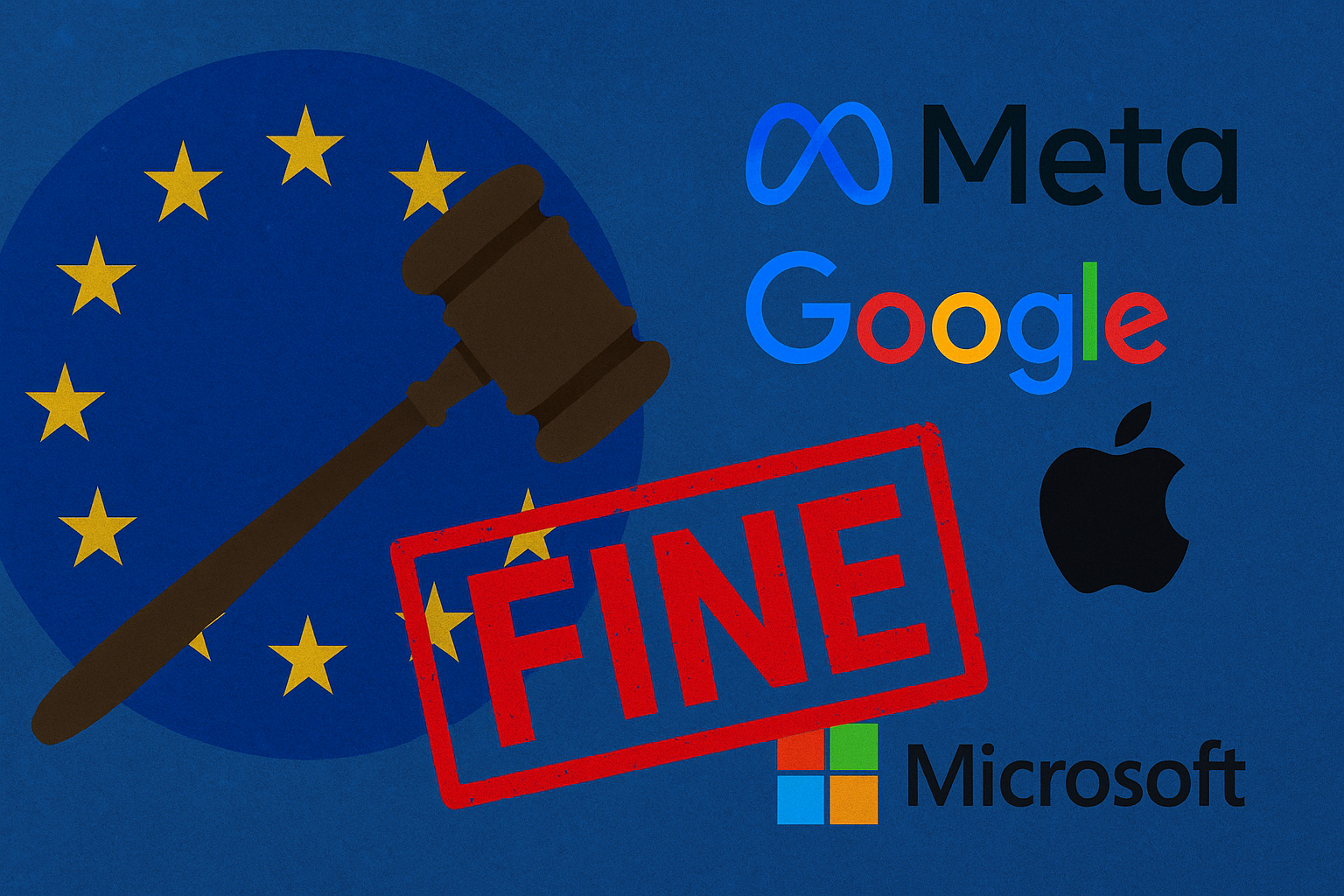
In April, the EU ordered Apple to pay €500 million and Meta €200 million—its first penalties under the new digital rules.
Apple was fined over restrictions in its App Store, while Meta was penalised for its data-consent framework.
The two tech firms reacted angrily, with Meta accusing the EU of “attempting to handicap successful American businesses” and Apple saying it was being “unfairly targeted” and forced to “give away our technology for free.
These actions followed a hefty penalty against Google, €2.4 billion fine last year.
However, this year too, in September, Google was hit with a €2.95 billion penalty for anticompetitive behaviour in the advertising technology market.
Regulators said Google used its market position to favour its own adtech tools at the expense of publishers and advertisers, and warned that stronger remedies could follow.
The increasing volume of enforcement has stirred political tensions.
Following the September fine against Google, President Donald Trump threatened to launch a trade investigation, accusing Brussels of targeting US tech companies.
“We cannot let this happen to brilliant and unprecedented American Ingenuity and, if it does, I will be forced to start a Section 301 proceeding to nullify the unfair penalties being charged to these Taxpaying American Companies,” Trump wrote on Truth Social in September.
The post How the EU is taking on Big Tech: Meta, Apple, Google, face heightened scrutiny, penalties appeared first on Invezz